Kinderdijk
Sunrise and Sunset in the Netherlands: Best Places to Watch

Watching the sun rise or set in the Netherlands can be one of the simplest and most memorable things to do during your trip. You do not need a special tour or expensive attraction. A quiet beach, a Dutch polder, a canal, a field of flowers, or a row of historic windmills can become a beautiful place to watch the changing light.

But there is one important thing to know before planning your sunrise or sunset experience: the time changes considerably depending on the season, the date, and your location in the Netherlands.

In this guide, you will learn when the sun rises and sets in the Netherlands, how much daylight you can expect in each season, and how to choose the right time for your plans. In the later sections, we will also look at some of the best places to watch sunrise and sunset.

Table of Contents

What Time Does the Sun Rise and Set in the Netherlands?

There is no single sunrise or sunset time for the whole Netherlands. The exact time changes every day and also varies slightly depending on where you are.

Kinderdijk

As a useful guide, winter mornings are late and winter evenings are early, while summer brings very long days. In Amsterdam, for example, sunrise is around 08:50 at the beginning of January, while sunset is around 16:37. Near the summer peak, sunrise can be around 05:20 and sunset can be after 22:00.

That means the best time for a sunrise or sunset experience depends heavily on when you visit.

Sunrise and Sunset by Season

Instead of memorizing a specific time for every day, it is easier to think about Dutch daylight in four seasons.

Winter: Short Days and Late Sunrises

From roughly December through February, the Netherlands has its shortest days of the year. Sunrise is generally late in the morning, while sunset can arrive surprisingly early in the afternoon.

For example, in Amsterdam on January 1, 2026, sunrise was about 08:50 and sunset about 16:37, giving less than eight hours of daylight.

This makes winter a particularly good season if you want to photograph a sunrise without having to wake up extremely early. A winter sunset is also relatively easy to fit into a sightseeing day because it happens in the late afternoon.

Spring: Rapidly Increasing Daylight

Spring is one of the biggest transition periods for daylight in the Netherlands. Sunrise becomes progressively earlier and sunset later as the days lengthen.

Arnhem

By April, there is already considerably more daylight than in winter. In Amsterdam, for example, sunrise was around 07:15 and sunset around 20:14 on April 1, 2026.

Spring is especially attractive if you want to combine sunrise or sunset with landscapes, cycling, or the Dutch flower season.

Summer: The Longest Days of the Year

Summer offers the longest daylight hours in the Netherlands. This is wonderful for evening walks, cycling and outdoor sightseeing, but there is a catch: sunset can be very late.

In Amsterdam, sunset reaches around 22:00 during the summer period, while sunrise can be shortly after 05:00. Around the beginning of July 2026, for example, sunrise was about 05:22 and sunset about 22:05.

Amsterdam Canal

If you are visiting in June or July, you may therefore need to plan a late evening for sunset or an early morning for sunrise.

Autumn: Earlier Sunsets and Changing Light

Autumn gradually brings shorter days again. Sunrise becomes later and sunset moves earlier, making sunset much easier to include in a normal sightseeing itinerary than it is during the height of summer.

The changing weather can also create dramatic skies, particularly when clouds break shortly before sunset. For photographers, autumn can therefore offer some excellent conditions even though the days are getting shorter.

How Much Daylight Does the Netherlands Get?

The difference between summer and winter is substantial.

SeasonWhat to ExpectBest For
WinterLate sunrise and early sunsetEasy-to-plan sunsets and atmospheric photography
SpringDaylight increases quicklyFlowers, cycling and landscape photography
SummerVery early sunrise and very late sunsetLong outdoor days and late-evening views
AutumnDaylight gradually decreasesGolden light, changing landscapes and earlier sunsets

These are seasonal patterns rather than fixed times. For an exact sunrise or sunset, always check the date and location you plan to visit.

Why Sunrise and Sunset Times Change

The changing times are caused by the Earth’s position relative to the Sun throughout the year. The Netherlands is far enough north for the difference between summer and winter daylight to be very noticeable.

There is another factor that can make the clock time seem confusing: daylight saving time.

The Netherlands uses Central European Time during the standard-time period and Central European Summer Time during the daylight-saving period. In 2026, the clocks move forward on March 29 and move back on October 25.

If you are unsure about the Dutch time zone or why the clock changes, our simple guide What Time is it in The Netherlands: Explain Like I’m Five (ELI5) explains it in straightforward language.

Sunrise, Sunset and Twilight Are Not the Same Thing

One common mistake is to treat sunset as the moment when the sky immediately becomes dark. It does not.

Sunrise is the point when the upper edge of the Sun appears above the horizon, while sunset is when it disappears below the horizon. After sunset, there can still be a significant amount of natural light in the sky.

This period is called twilight. It is one reason you can often continue taking photographs or walking outdoors after the official sunset time.

The same applies before sunrise. If you arrive before the official sunrise, the sky may already be beginning to brighten.

When Should You Arrive for Sunrise or Sunset?

If your goal is simply to see the Sun appear or disappear, you could arrive shortly before the published time. However, arriving 20 to 30 minutes earlier is usually a much better choice.

Arriving early gives you time to:

  • Find the best viewpoint.
  • Set up your camera or phone.
  • Walk to the waterfront, field or viewpoint.
  • Watch the sky change before the actual sunrise or sunset.
  • Allow extra time if the location is unfamiliar.

For popular locations, allow even more time. The official sunrise or sunset time tells you when the Sun reaches the horizon; it does not tell you when you should leave your hotel.

Sunrise or Sunset: Which Is Better?

There is no universal winner. The better choice depends on your travel schedule and the type of experience you want.

Choose sunrise if you want:

  • Quieter surroundings.
  • Fewer people at popular locations.
  • Soft early-morning light.
  • A peaceful start to the day.

Choose sunset if you want:

  • A more relaxed experience after sightseeing.
  • Golden-hour photography without waking up early.
  • More flexibility during your travel day.
  • To combine the view with dinner or an evening activity.

In summer, however, remember that a Dutch sunset can happen very late. In Amsterdam, sunset can remain around or after 22:00 during the longest days of the year.

A Simple Rule for Planning Your Day

If you are building a Netherlands itinerary around sunrise or sunset, use this simple sequence:

  1. Choose your location.
  2. Check the exact date.
  3. Look up the local sunrise or sunset time.
  4. Plan to arrive 20–30 minutes earlier.
  5. Check the weather before leaving.

This is more reliable than using a generic “sunset time in the Netherlands,” because the exact time changes from day to day and differs somewhat by location.

Now that you know when to plan your visit, the next question is where to go.

Best Places to Watch the Sunrise and Sunset in the Netherlands

Once you know the approximate sunrise or sunset time, the next question is simple: where should you watch it?

The Netherlands offers very different settings for sunrise and sunset. You can watch the sky change behind historic windmills, over a wide North Sea beach, beside a lake, among flower fields, or from a quiet spot outside one of the country’s cities.

Not every location is equally good for both sunrise and sunset, however. The direction in which you are looking matters. Your experience can also depend on the season, weather, accessibility and how much walking or cycling you are willing to do.

1. The North Sea Coast: Best for Open Horizons

The Dutch coast is one of the easiest choices if you want a wide, unobstructed view of the sky.

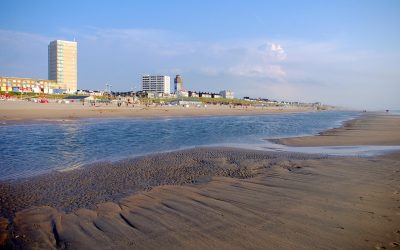
With the North Sea stretching to the west, the coast can be particularly attractive for sunset. Beaches near Scheveningen, Noordwijk, Zandvoort and other coastal towns offer plenty of open space, although the exact view depends on the beach, buildings and dunes around you.

The coast can also be beautiful around sunrise. If you are on the beach early enough, you can experience the changing colors of the sky before the day’s visitors arrive.

Best for: sunset, beach photography, long horizons and relaxing evening walks.

Tip: Check the weather before you leave. Coastal conditions can change quickly, and wind can make a summer evening feel surprisingly cool.

2. Scheveningen: An Easy Sunset Choice

If you are staying in or around The Hague, Scheveningen is one of the easiest places to combine a sunset with a normal sightseeing day.

Scheveningen

The beach gives you a broad western horizon, while the boulevard and surrounding restaurants make it possible to continue your evening after the Sun has disappeared.

This makes Scheveningen particularly suitable if you do not want your sunrise or sunset experience to require a full-day excursion.

Best for: sunset, beach walks and combining the view with an evening in The Hague.

3. Kinderdijk: Windmills and Golden-Hour Light

Few landscapes are as recognizably Dutch as the windmills of Kinderdijk.

The historic windmills, waterways and open polder landscape create a distinctive setting for photography. Around sunrise or sunset, the changing light can make the landscape especially atmospheric.

Kinderdijk is therefore a strong choice if your main goal is not simply to see the Sun but to capture a classic Dutch landscape at the same time.

Best for: windmills, landscape photography and iconic Dutch scenery.

Because the landscape is relatively open, check the exact position of the Sun for your chosen date before deciding where to stand. The best viewpoint for one time of year may not produce the same composition several months later.

4. Zaanse Schans: Traditional Dutch Scenery

Zaanse Schans is another excellent option if you want your sunrise or sunset photographs to include traditional Dutch architecture and windmills.

Zaanse Schans

The combination of wooden houses, historic windmills, water and open surroundings provides plenty of photographic opportunities.

An early visit can also give you a very different experience from visiting in the middle of the day. The atmosphere is quieter, and the softer light can make the landscape feel more peaceful.

Best for: traditional Dutch scenery, windmills and photography.

If you are considering an early-morning visit, check opening arrangements and access information for the specific areas you want to visit rather than assuming every attraction will be operating at sunrise.

5. The Dutch Flower Fields: Best in Spring

Spring adds another possibility: watching the sunrise or sunset over the Dutch flower-growing regions.

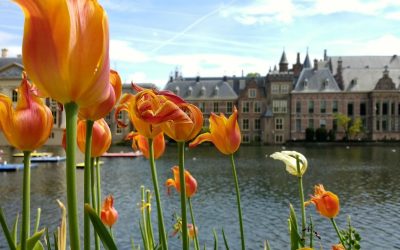
The area around Lisse and the famous bulb fields can be spectacular when the tulips and other flowers are in bloom. Rows of color combined with low sunlight can create very strong photographic compositions.

However, flower fields are agricultural land, not automatically public attractions. Never walk into a field simply because it looks accessible. Stay on designated paths or visit locations where access is explicitly permitted.

Best for: spring photography, colorful landscapes and combining sunrise or sunset with the Dutch flower season.

If you want to visit the famous spring flower attractions, check their opening dates before planning a sunrise visit because seasonal attractions do not necessarily operate from dawn.

6. Keukenhof: Beautiful Spring Light

Keukenhof is one of the Netherlands’ best-known spring attractions and can be a beautiful setting for morning or late-afternoon photography when it is open.

Keukenhof

The gardens contain extensive flower displays, paths, trees and water features, giving photographers many different compositions.

There is one important practical point: Keukenhof is a seasonal attraction. You cannot assume it is open every day of the year or that you can enter at sunrise. Always check the current opening information when planning your visit.

Best for: spring flowers, garden photography and colorful landscapes.

7. Texel and the Wadden Islands: Space, Nature and Big Skies

If you want to get away from the busiest cities, consider the Dutch Wadden Islands.

Texel is particularly accessible and offers beaches, dunes, nature areas and broad skies. The island can be a rewarding choice for travelers who want their sunrise or sunset experience to feel like part of a wider nature trip rather than a quick stop between city attractions.

The other Wadden Islands can also offer impressive landscapes, but accessibility and transport arrangements vary. Check ferry schedules and local access conditions before making a sunrise plan.

Best for: nature, beaches, dunes, photography and a slower travel experience.

8. Amsterdam: You Do Not Have to Leave the City

You do not need to travel to the coast or countryside to enjoy beautiful Dutch light.

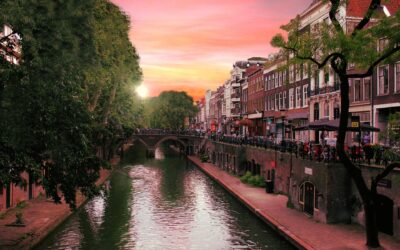
Amsterdam’s canals, bridges and historic buildings can create attractive sunrise and sunset scenes, particularly when the water reflects the changing sky.

Amsterdam City Center

For sunrise, quieter canal streets can be especially appealing because there are generally fewer people around than during the daytime. For sunset, look for an open viewpoint where the surrounding buildings do not block the part of the sky you want to photograph.

Best for: travelers with limited time, canal photography and combining sunrise or sunset with city sightseeing.

If you are planning a city-based trip, an early morning or evening walk can therefore be an easier option than making a special excursion to another part of the country.

9. Dutch Lakes and Polders: Look Beyond the Famous Spots

One advantage of traveling in the Netherlands is that you do not always need a famous attraction to find a good sunrise or sunset.

The country’s lakes, canals, polders and open agricultural landscapes can provide excellent views because there are relatively few tall natural obstacles across the flat landscape.

Look for places where you have a safe and legal public viewpoint with an unobstructed horizon. A location that is ordinary during the middle of the day can become surprisingly beautiful when the sky turns orange or pink.

Best for: quiet experiences, cycling routes, landscape photography and travelers who prefer less crowded places.

Which Location Should You Choose?

The best location depends on the experience you want rather than on one universally “best” place.

If you want…Consider…
A classic Dutch landscapeKinderdijk or Zaanse Schans
A wide open horizonThe North Sea coast
An easy evening activityScheveningen or another coastal town
Spring flowersThe Dutch bulb fields or Keukenhof
Nature and fewer city distractionsTexel or another Wadden Island
A city experienceAmsterdam’s canals
A quiet, flexible optionA suitable lake, polder or countryside viewpoint

Sunrise or Sunset at These Locations?

When choosing between sunrise and sunset, remember that the direction of the Sun changes across the horizon during the year.

In broad terms, the Sun rises toward the east and sets toward the west, but the precise point on the horizon changes throughout the year. This means a viewpoint that is perfect for a summer sunset may not give you the same composition in winter.

For the best results, check the exact sunrise or sunset direction for your date before traveling to a particular viewpoint.

Make the Sunrise or Sunset Part of Your Itinerary

The most successful sunrise and sunset experiences are often not standalone activities. They work better when you connect them to the rest of your day.

For example:

  • Sunrise + cycling: Start early, watch the sunrise and continue your cycling route while the roads and paths are quieter.
  • Sunset + dinner: Choose a coastal location where you can have dinner after watching the Sun disappear.
  • Sunrise + photography: Arrive early and use the pre-sunrise light as part of your photography session.
  • Sunset + city sightseeing: Finish a day in Amsterdam or The Hague with an evening view.
  • Spring flowers + golden hour: Combine a flower-field visit with the softer light of early morning or late afternoon, while respecting access restrictions.

The key is to choose the location before you choose the exact time. Once you know where you want to go, you can check the precise sunrise or sunset time for that date and plan the rest of your itinerary around it.

How to Plan Your Sunrise or Sunset Experience in the Netherlands

Choosing a beautiful location is only half the plan. The difference between a memorable sunrise or sunset and a rushed experience often comes down to a few practical details.

Once you know where you want to go, check the exact date, sunrise or sunset time, weather forecast and how you will get there.

How Early Should You Arrive for Sunrise?

For sunrise, arriving at the exact sunrise time is usually too late if you want to enjoy the changing colors of the sky.

A good general rule is to arrive 20 to 30 minutes before sunrise. If the location requires walking, cycling or finding a particular viewpoint, allow additional time.

The sky can begin changing well before the Sun appears above the horizon. This pre-sunrise period can be particularly beautiful on a clear or partly cloudy morning.

For a remote location, it is sensible to visit the area during daylight beforehand if possible. This allows you to understand the route and identify a safe viewpoint before attempting the same journey in darkness.

How Early Should You Arrive for Sunset?

For sunset, arriving 20 to 30 minutes before the official sunset time is a good starting point.

However, you may want to arrive even earlier at a popular location. You will have more time to find a parking space, walk to the beach, choose a viewpoint or simply enjoy the landscape before the Sun reaches the horizon.

Remember that sunset is not necessarily the end of the experience. The sky can remain bright and colorful after the Sun has disappeared, particularly when there are suitable clouds on the horizon.

Check the Weather Before You Leave

Sunrise and sunset times can be predicted very accurately, but the appearance of the sky cannot.

A completely clear sky can produce beautiful colors, but clouds can sometimes create a much more dramatic scene. On the other hand, thick low cloud can hide the Sun entirely.

For this reason, check the forecast shortly before you leave rather than relying only on a forecast you saw several days earlier.

Pay particular attention to:

  • Cloud cover
  • Rain
  • Wind
  • Visibility
  • Temperature

This is especially important on the Dutch coast, where conditions can feel considerably colder and windier than you might expect from the temperature shown in a general city forecast.

What Should You Bring?

You do not need specialist equipment to enjoy a Dutch sunrise or sunset. A smartphone is perfectly capable of taking good photographs, particularly when the light is favorable.

Depending on your location and the season, consider bringing:

  • A fully charged phone or camera.
  • An extra battery or power bank.
  • A tripod if you want longer-exposure photographs.
  • A warm layer, even in summer.
  • Water.
  • Comfortable shoes.
  • A small flashlight or headlamp for an early-morning walk.

If you are cycling, also make sure your bicycle has appropriate lights when traveling in darkness or low light.

Sunrise in Summer: Be Prepared for an Early Start

Summer is wonderful for long days in the Netherlands, but an early sunrise can be a challenge for travelers who are not used to northern European summer daylight.

Near the summer peak, sunrise in Amsterdam can occur shortly after 05:00. Around the beginning of July 2026, for example, sunrise was approximately 05:22.

If you want to photograph a summer sunrise, consider staying relatively close to your chosen viewpoint. Traveling across the country at that hour can turn a peaceful morning into a stressful one.

A useful alternative is to choose a sunset instead. The trade-off is that summer sunset can be very late, with Amsterdam seeing sunset at around 22:00 during the longest days.

Sunset in Winter: An Easier Option

Winter offers almost the opposite experience.

The Sun sets much earlier, which means you can enjoy a sunset without staying up late. In Amsterdam, sunset is around 16:30–16:40 during parts of December and January.

This makes winter sunset particularly convenient for travelers who spend the day sightseeing and want to finish with a view of the evening sky.

The downside is that winter temperatures can be low, especially in exposed locations. Bring appropriate clothing and check the wind forecast if you are heading to the coast.

Does Daylight Saving Time Affect Sunrise and Sunset?

Yes. The actual astronomical movement of the Sun does not suddenly change because the clocks move, but the clock time shown for sunrise and sunset does.

The Netherlands changes from Central European Time to Central European Summer Time in spring and changes back in autumn.

In 2026, daylight saving time begins on March 29, when the clocks move forward by one hour. It ends on October 25, when the clocks move back by one hour.

This can be important when comparing sunrise or sunset times from different months or planning transportation.

If Dutch time zones are confusing, read our easy explanation: What Time is it in The Netherlands: Explain Like I’m Five (ELI5).

How Do the Dutch Write Times?

You may also notice that Dutch websites, train information and attraction pages often display times differently from websites in English-speaking countries.

The Netherlands commonly uses the 24-hour clock. For example, 7:30 PM is generally written as 19:30.

This is particularly useful to understand when you are checking transport schedules or opening hours before a sunrise or sunset excursion. A time such as 05:30 means early morning, while 22:00 means 10:00 PM.

If you also want to understand how Dutch dates and times are written, see How to Write the Date and Time in the Netherlands.

Be Careful When Planning Around Attractions

One of the most important practical points is that sunrise does not mean an attraction is open at sunrise.

A beach may be accessible early in the morning, while a garden, museum, visitor center or paid attraction may have restricted opening hours.

This matters particularly when planning sunrise visits to famous tourist attractions such as Keukenhof or other managed sites.

Before traveling, check:

  • Opening hours.
  • Entry requirements.
  • Whether early access is permitted.
  • Parking arrangements.
  • Public transport schedules.
  • Whether the location is accessible outside normal visitor hours.

Do not assume that because you can see a location from outside, you are automatically allowed to enter its grounds before opening time.

Respect Private Property and Flower Fields

The Dutch countryside can look like one enormous open landscape, but much of it is privately owned or used for agriculture.

This is particularly important around the famous tulip fields. A colorful field may be tempting to enter for a photograph, but walking between the flowers can damage crops and may be prohibited.

Stay on public roads, designated paths and officially permitted viewpoints unless the landowner explicitly allows access.

You can still get excellent photographs without stepping into a field. Often, the rows of flowers look more impressive when photographed from an appropriate distance.

Safety During a Pre-Sunrise Visit

A sunrise excursion often means traveling while it is still dark. Treat the journey as seriously as the destination.

  • Use a flashlight or headlamp on dark paths.
  • Wear reflective clothing if cycling.
  • Stay on designated paths.
  • Be particularly careful near roads and waterways.
  • Check the weather if you are visiting an exposed coastal area.
  • Do not enter restricted areas simply to find a better photograph.

If you are unfamiliar with the area, a popular and accessible location can be a better choice than an isolated viewpoint that looks spectacular on a map.

Photography Tips for Better Sunrise and Sunset Photos

You do not need a professional camera, but a few simple techniques can make a noticeable difference.

Arrive Before the Main Event

The most interesting light may happen before sunrise or after sunset. Give yourself time to photograph the transition rather than taking one photograph and leaving immediately.

Look Beyond the Sun

The Sun itself does not always need to be in the photograph. Reflections in water, silhouettes of windmills, bridges, trees, buildings and people can make a more interesting composition.

Use the Landscape

Think about what makes the location distinctive. At Kinderdijk, for example, the windmills are part of the story. In Amsterdam, canals and bridges can frame the sky. At the coast, the horizon and beach can create a much simpler composition.

Do Not Forget the Sky Behind You

Sunrise and sunset colors can spread across a large part of the sky. Sometimes the best photograph is not directly toward the Sun but in another direction where the clouds are catching the light.

A Simple Sunrise and Sunset Planning Checklist

  • Choose your location.
  • Check the exact date.
  • Check the local sunrise or sunset time.
  • Check the weather forecast.
  • Check opening hours and access restrictions.
  • Plan your transport.
  • Arrive around 20–30 minutes early.
  • Bring suitable clothing and a charged phone.
  • Use extra care if traveling before sunrise.

Once these details are sorted, the experience becomes much easier. You can concentrate on the landscape rather than worrying about whether you are in the right place at the right time.

Where Should You Watch the Sunrise or Sunset in the Netherlands?

By now, you know that the best sunrise or sunset experience depends on three things: when you visit, where you go, and what kind of experience you want.

There is no single location that is best for everyone. A photographer may prefer the windmills of Kinderdijk, a couple may prefer a quiet beach, while a first-time visitor to Amsterdam may simply want to watch the evening light over the canals.

Use the guide below to make your choice easier.

Choose Your Experience

If you want…Best type of locationGood choices
Classic Dutch sceneryWindmills and waterwaysKinderdijk or Zaanse Schans
A wide horizonBeach or coastlineScheveningen, Noordwijk or another North Sea beach
Colorful spring photographyFlower landscapesBulb fields or Keukenhof when open
Nature and open skiesIsland, dunes or countrysideTexel and other suitable Wadden Island locations
A convenient city experienceCanals and waterfrontsAmsterdam
A quieter experienceOpen countryside or waterA suitable public polder or lakeside viewpoint

Best Time of Year for Sunrise and Sunset

Visit in Winter

Choose winter if you want an easy sunset.

The days are short, so sunset occurs in the late afternoon. You do not need to stay out until late in the evening, and a sunset can easily fit into a normal sightseeing day.

Winter is also a good choice if you are interested in atmospheric photography. Bare trees, historic buildings, canals and dramatic skies can create a very different image of the Netherlands from the sunny summer scenes often shown in travel brochures.

Visit in Spring

Choose spring if flowers are part of your plan.

The increasing daylight makes both sunrise and sunset increasingly accessible, while the Dutch bulb-growing regions provide some of the country’s most recognizable seasonal landscapes.

Keep in mind that flower displays are seasonal and that access to individual fields can be restricted. Plan your visit around permitted viewpoints and attractions.

Visit in Summer

Choose summer if you want maximum daylight.

Summer gives you long days for cycling, walking and sightseeing. You can have dinner, explore a city and still have plenty of daylight left.

The main disadvantage is timing. Sunrise can occur shortly after 05:00, while sunset can be around 22:00. If you are specifically visiting for sunrise or sunset, check the exact time before making your plans.

Visit in Autumn

Choose autumn if you want earlier sunsets and changing landscapes.

As the days shorten, sunset becomes easier to incorporate into an evening itinerary. Changing foliage, clouds and lower-angle sunlight can also create attractive photographic conditions.

Sunrise or Sunset: Which Should You Choose?

If you are still unsure, use this simple rule:

Choose sunrise for peace and quiet. Choose sunset for convenience.

Sunrise usually means fewer people and a quieter atmosphere. It can be particularly rewarding at a beach, in the countryside or around canals before the day’s activity begins.

Sunset is easier for most travelers because you can spend the day sightseeing and then make your way to your chosen viewpoint in the evening.

There is no wrong choice. The best option is the one that fits your itinerary.

Can You See a Sunrise and Sunset on the Same Day?

Yes. In fact, this is surprisingly easy during much of the year because the Netherlands has such a large difference in daylight between winter and summer.

In summer, the challenge is not the length of the day but the timing. A sunrise shortly after 05:00 and a sunset around 22:00 require a very long day if you want to experience both.

In winter, the opposite is true: the sunrise is late and the sunset is early, making both events easier to fit into a single day without staying awake all night.

If you want to photograph both, consider choosing two different types of location. For example, you could watch sunrise beside a quiet canal and finish the day with sunset on the coast.

Frequently Asked Questions About Sunrise and Sunset in the Netherlands

What time is sunrise in the Netherlands?

Sunrise varies throughout the year and depends on the exact location. In winter, sunrise can be around 08:30–08:50, while around the summer peak it can occur shortly after 05:00 in places such as Amsterdam.

For an exact time, always check the specific date and location rather than relying on a general Netherlands-wide time.

What time is sunset in the Netherlands?

Sunset varies significantly by season. During winter it can occur around 16:30–17:00, while during the summer peak it can be around 22:00 or slightly later in some locations.

The exact time depends on your date and location.

What month has the latest sunset in the Netherlands?

The latest sunsets occur around the summer period, generally around late June and early July. The exact date and clock time vary by location.

This is also why a summer evening in the Netherlands can remain surprisingly bright long after dinner.

What month has the earliest sunset in the Netherlands?

The earliest sunsets occur around the winter period, although the exact timing varies by location and date.

Do not assume that the shortest day of the year automatically has the earliest sunset. Sunrise and sunset do not shift symmetrically around the clock throughout the year.

What is the longest day in the Netherlands?

The longest day occurs around the summer solstice, usually around June 20 or June 21. This is when the Netherlands experiences its greatest amount of daylight.

The exact length of daylight varies slightly depending on where you are in the country.

What is the shortest day in the Netherlands?

The shortest day occurs around the winter solstice, usually around December 21 or December 22. This is when the Netherlands has its least amount of daylight.

Sunrise is late and sunset is early, creating a very different experience from the long summer days.

Is the Netherlands good for watching sunsets?

Yes. The country’s beaches, lakes, canals, polders and open landscapes offer many opportunities to watch the evening sky.

The North Sea coast is particularly attractive if you want a broad western horizon, while locations such as Kinderdijk and Zaanse Schans are better suited to travelers who want a traditional Dutch landscape in the photograph.

Where is the best place to see a sunrise in the Netherlands?

There is no single best location. For a sunrise, look for a place with a clear view toward the eastern part of the horizon.

Quiet beaches, open countryside, waterways and suitable viewpoints around cities can all work well. The best choice depends on the season and the exact position of sunrise on your chosen date.

Where is the best place to see a sunset in the Netherlands?

The North Sea coast is one of the easiest choices because of its broad western horizon. Scheveningen, for example, is convenient if you are staying in or visiting The Hague.

For classic Dutch scenery, Kinderdijk and Zaanse Schans can provide a very different sunset experience with windmills, waterways and historic architecture.

Do I need to arrive before sunset?

Yes. Arriving approximately 20–30 minutes before sunset gives you time to find a good viewpoint and enjoy the changing light before the Sun reaches the horizon.

At a popular attraction or a location requiring a walk, allow more time.

How early should I arrive for sunrise?

Arriving approximately 20–30 minutes before sunrise is a good general rule. If you need to walk or cycle to the viewpoint, allow additional time.

If you are unfamiliar with the area, consider visiting during daylight first so you know the route and can identify a safe viewpoint.

Does the Netherlands use daylight saving time?

Yes. The Netherlands changes between standard time and daylight saving time.

In 2026, the clocks moved forward on March 29 and will move back on October 25.

If you want a simple explanation of Dutch time zones and the clock change, read What Time is it in The Netherlands: Explain Like I’m Five (ELI5).

Does the Netherlands use the 24-hour clock?

Yes. The 24-hour clock is commonly used in the Netherlands. For example, 18:30 means 6:30 PM and 22:00 means 10:00 PM.

This is useful to remember when reading Dutch transport schedules, attraction information and sunrise or sunset times.

For more information about Dutch date and time conventions, see How to Write the Date and Time in the Netherlands.

Check the Exact Time Before You Go

The seasonal information in this guide gives you a useful idea of what to expect, but the most important step is to check the exact sunrise or sunset time for your chosen date and location.

A difference of even a few minutes can matter if you are traveling specifically for photography or trying to catch the Sun at a particular point on the horizon.

Also check the weather and access conditions shortly before leaving. A perfect astronomical forecast does not guarantee a visible sunrise or sunset if thick cloud covers the horizon.

Make Sunrise or Sunset Part of Your Netherlands Trip

You do not have to build an entire trip around sunrise or sunset. Often, the best approach is to make it the highlight at the beginning or end of an existing day.

Start a cycling route with sunrise. Finish a beach day with sunset. Visit the windmills during golden hour. Walk along an Amsterdam canal as the evening light reflects in the water. Or simply find a quiet place in the countryside and watch the sky change.

The Netherlands is particularly well suited to this because its relatively flat landscape gives you many opportunities to find open views.

Your Simple Sunrise and Sunset Plan

  1. Choose the experience: beach, windmills, flowers, city or countryside.
  2. Choose the date: remember that daylight changes dramatically through the year.
  3. Check the exact sunrise or sunset time: use the specific location rather than a generic Netherlands time.
  4. Check the weather: especially cloud cover and wind.
  5. Check access: make sure your chosen viewpoint is actually accessible at that time.
  6. Arrive early: approximately 20–30 minutes before the event, or earlier if necessary.
  7. Stay a little longer: the light can remain beautiful after sunset.
  8. Enjoy the experience: you do not need a professional camera to appreciate it.

Final Thought

The most beautiful sunrise or sunset in the Netherlands is not necessarily at the country’s most famous attraction. Sometimes it is a quiet moment beside a canal, on a beach, beside a windmill or in an open landscape when the sky suddenly catches fire with color.

Choose your location, check the exact time, arrive early and give yourself enough time to enjoy the changing light.

And if you are still planning your Netherlands trip, don’t stop with this page. Understanding what time it is in the Netherlands can make travel planning easier, while knowing how Dutch dates and times are written can help when reading schedules, reservations and local information.