If you are visiting the Netherlands for the first time, you may notice something almost immediately: Dutch cars have bright yellow license plates.
Whether you are walking through Amsterdam, exploring Utrecht, driving through Rotterdam, or travelling through the Dutch countryside, that yellow rectangle is hard to miss.
So why are Dutch license plates yellow?
The short answer is visibility and readability. The Netherlands introduced yellow reflective license plates in 1978, replacing the older dark blue plates as the standard design. The yellow background with black characters was chosen because it provides a highly readable combination, including in conditions where visibility matters.
There is more to the story, though. Dutch license plates also have an interesting history, specific rules, and a few exceptions that travelers often notice.
Last updated: August 27, 2026.
The short answer: yellow makes Dutch plates easy to see
Why did the Netherlands choose yellow?
The main reason is visibility.
Dutch license plates use a yellow reflective background with black characters. This creates a strong contrast that makes the registration easier to recognize and read.
This was particularly important when the Netherlands moved to the modern yellow plate system in 1978. According to the Dutch vehicle authority RDW, yellow reflective plates became compulsory that year. Historical RDW material also explains that research found the yellow and black combination to be highly readable.
In other words, the color was not chosen simply because yellow looked attractive or because it was considered a national color.
It was a practical choice.
Why are the plates reflective?
The reflective material is an important part of the design.
A license plate needs to remain identifiable in changing conditions, including darkness and poor weather. A reflective surface helps the plate stand out when illuminated by headlights or other light sources.
This is one reason the Dutch plates can appear especially bright when you see a car at night.
The familiar combination of yellow, black characters, and reflective material therefore serves a practical purpose rather than being merely decorative.
Is yellow a Dutch national color?
Not exactly.
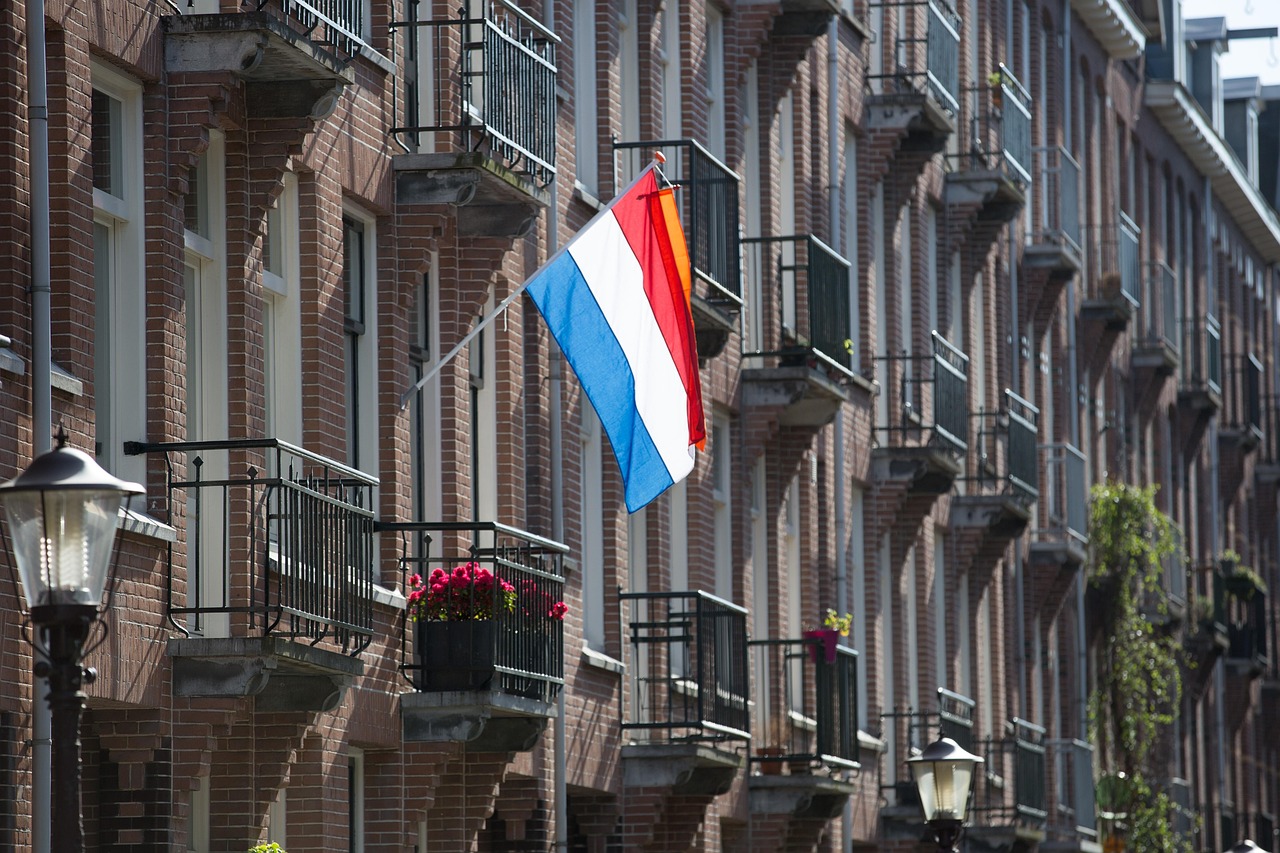
The Dutch national flag is red, white, and blue, not yellow. So the yellow license plate should not be confused with the colors of the Dutch flag.
There is, however, a fascinating connection between Dutch colors and national identity. If you have ever wondered why orange is associated so strongly with the Netherlands despite orange not appearing on the national flag, our article Why does the Netherlands wear orange instead of the flag colors? explains the story.
The history of Dutch license plates
What did Dutch license plates look like before 1978?
The modern yellow plate was not the first Dutch license plate design.
Before the current system, Dutch vehicles used dark blue plates with white characters. These older plates are an interesting reminder that the yellow design has not always been part of Dutch road life.
The nationwide vehicle registration system itself has a much longer history. Over time, registration systems and number combinations changed as the number of vehicles on Dutch roads increased.
What changed in 1978?
1978 was the important turning point for the familiar yellow plate.
RDW historical information confirms that yellow reflective license plates became compulsory in that year. They had already been available voluntarily before becoming the standard.
The change also coincided with a new registration series because the available registration combinations were becoming limited.
That means the yellow plate was not introduced because the Netherlands suddenly decided that yellow was fashionable. It was part of a broader modernization of the Dutch vehicle registration system.
Can you still see blue Dutch license plates?
Yes, but there is an important distinction.
Dark blue historical plates can still be used for qualifying historic vehicles. RDW states that vehicles first admitted before January 1, 1978 can qualify for dark blue historical plates, subject to the applicable requirements.
So if you see an older vehicle with a dark blue Dutch plate, it does not necessarily mean that the owner is using an outdated plate illegally. It may be a legitimate historical plate.
This is one of those small details that can make spotting cars in the Netherlands more interesting.
What does a Dutch license plate actually tell you?
What do the letters and numbers mean?
Dutch registration numbers are issued in different combinations of letters and numbers.
These combinations are used to identify the vehicle within the Dutch registration system. They are not simply a straightforward code showing the vehicle's exact age.
This is an important distinction because travelers sometimes assume that the registration number works like a simple year code. It does not.
The registration number is connected to the vehicle registration rather than being a personalized message chosen by the owner.
Does a Dutch license plate identify the driver?
No.
A license plate identifies the registered vehicle. It does not tell you who is currently driving the car.
This distinction is useful for visitors because the registration plate is primarily a vehicle identification system rather than a personal nameplate.
Why is there a blue strip on many Dutch plates?
Modern Dutch plates include a blue section on the left with the European Union symbol and the country code NL.
The NL marking identifies the Netherlands in the European registration system.
So when you are travelling around Europe, a yellow plate with the NL country marking is a quick visual clue that the vehicle is registered in the Netherlands.
Why are Dutch license plates so easy to recognize?
The yellow and black combination
One reason Dutch plates stand out so strongly is their simple visual design.
The yellow background contrasts sharply with the black characters. Combined with the reflective surface, this makes the registration plate relatively easy to distinguish from the rest of the vehicle.
That is useful for people, authorities, and systems that need to identify vehicles.
It also explains why the plates are so noticeable to travelers. If you arrive in the Netherlands from a country where vehicles commonly use white plates, the Dutch yellow plates can seem unusually bright.
Why does the Netherlands use yellow on both ends of the car?
For the standard Dutch vehicle plate system, the familiar yellow reflective plate is used rather than having one color at the front and another at the rear.
This gives Dutch vehicles a particularly consistent appearance.
It is different from countries such as the United Kingdom, where yellow plates are associated with the rear of vehicles while the front uses a white plate.
When you are driving around the Netherlands, the consistent yellow appearance makes Dutch vehicles easy to recognize in traffic.
Are all Dutch vehicles required to have yellow plates?
No. There are exceptions.
RDW regulations include different plate types for particular vehicles and situations. For example, qualifying historic vehicles can use dark blue plates, while taxis have their own light blue plate requirements.
There are also different plate formats and exceptions depending on the vehicle.
For a traveler, however, the simple rule is easy to remember: the yellow reflective plate is the familiar standard Dutch vehicle plate you will see on most ordinary cars.
What travelers should know about Dutch cars and plates
Can you drive in the Netherlands with a foreign license plate?
Yes, visitors can travel in the Netherlands with a vehicle registered in another country, provided they meet the applicable rules for using that foreign registration.
The situation becomes different if you move to the Netherlands and become a resident. RDW explains that people relocating to the Netherlands can only use foreign registration plates for a limited period before they need to deal with Dutch registration requirements.
So a tourist arriving by car from another European country should not assume that every vehicle in the Netherlands needs a yellow Dutch plate.
You will see plenty of foreign plates on motorways, at airports, near tourist attractions, and in border regions.
How can you recognize a Dutch car abroad?
The yellow plate is one of the easiest clues.
If you are travelling through Belgium, Germany, France, or another European country and see a car with a bright yellow plate and an NL marking, there is a good chance that the vehicle is registered in the Netherlands.
This can be particularly noticeable on road trips because the Dutch plate is visually different from the white plates commonly found in many neighboring countries.
Does a yellow plate mean the driver is Dutch?
Not necessarily.
The plate tells you where the vehicle is registered, not the nationality of the person behind the wheel.
A Dutch registered vehicle can be driven by someone who is not Dutch, just as a foreign registered vehicle can be driven by someone travelling through the Netherlands.
Why this small detail matters when you visit the Netherlands
It is part of the Dutch road experience
When you visit a new country, small everyday details often tell you more about the place than famous landmarks do.
Dutch license plates are a good example.
The yellow color reflects a practical approach to vehicle identification. The standardized design makes vehicles easy to recognize. The registration system has evolved over time as the Netherlands became increasingly motorized.
It is a small piece of everyday Dutch infrastructure, but it can tell you something about how the country approaches organization and practicality.
The plate is not connected to the Dutch flag
It is also worth remembering that the yellow plate is not an alternative version of the Dutch flag.
The Dutch flag is red, white, and blue. The yellow license plate has a different story based primarily on visibility, readability, and the development of the vehicle registration system.
If you are curious about the difference between the Netherlands, Holland, and Dutch, you can continue with our guide The Netherlands vs Holland vs Dutch explained for travelers.
There is a practical connection to driving in the Netherlands
Once you start noticing Dutch license plates, you may find yourself paying more attention to the way traffic works in the Netherlands.
That leads naturally to another question many visitors have: why do people drive on the right side of the road?
Our guide Why do people drive on the right side of the road? explains the history and practical reasons behind this familiar road rule.
What should you do next?
If you are planning to drive in the Netherlands
Now that we know why Dutch license plates are yellow, the next useful question is how driving in the Netherlands actually works.
Understanding which side of the road to use is only the beginning. Dutch roads also have distinctive cycling infrastructure, traffic signs, priority rules, and road layouts that can feel different from what you are used to at home.
Start with our guide to why people drive on the right side of the road and continue from there into the practical side of Dutch road travel.
If you are curious about Dutch culture
Maybe the yellow plate was simply the detail that made you curious about the Netherlands.
If so, there are plenty of other small details that become more interesting once you know the story behind them.
For example, why is orange associated with the Netherlands when orange does not appear on the Dutch flag?
Our guide Why does the Netherlands wear orange instead of the flag colors? explores that question and explains one of the most recognizable parts of Dutch national identity.
If you are still getting to know the Netherlands
If this is your first trip and you are trying to understand the country before you arrive, our guide What is the Netherlands: explain like I'm five is a useful next step.
It gives you a simple overview of the country, its geography, and the basic ideas that help make the Netherlands easier to understand as a traveler.
More useful questions for your trip
What plug adapter do you need in the Netherlands?
Once the curiosity about Dutch cars and roads turns into actual trip planning, practical questions become more useful.
One of the easiest things to check before you travel is whether your electronic devices will work with Dutch sockets.
Our guide to the plug adapter for the Netherlands can help you determine whether you need an adapter for your trip.
Why are Dutch license plates yellow in one sentence?
Dutch license plates are yellow because the Netherlands adopted yellow reflective plates as the standard in 1978, using a highly visible and readable yellow and black combination.
The color is therefore primarily about practical vehicle identification and visibility, rather than the Dutch national flag.
What should we remember?
The next time you see a bright yellow plate while travelling through the Netherlands, you will know that it is more than just a distinctive color.
It represents a vehicle registration system that changed significantly in 1978, when yellow reflective plates became compulsory. Qualifying historic vehicles can still use dark blue historical plates, which is why an occasional older vehicle may look very different.
For most travelers, though, the yellow plate is one of the easiest visual clues that you are looking at a Dutch registered vehicle.
And once you start noticing details like this, the Netherlands becomes a little more interesting. The roads, colors, signs, bicycles, architecture, and everyday customs all have stories behind them.
That is often where the most useful travel discoveries begin.
Frequently asked questions about Dutch license plates
Why are Dutch license plates yellow?
The Netherlands uses yellow reflective license plates because the yellow and black combination provides strong visibility and readability. Yellow reflective plates became compulsory in 1978.
Were Dutch license plates always yellow?
No. Older Dutch plates were dark blue with white characters. The yellow reflective system became compulsory in 1978.
Can Dutch cars have blue license plates?
Yes. Qualifying historic vehicles that were first admitted before January 1, 1978 can use dark blue historical plates under the applicable RDW rules.
Do the letters and numbers show the age of a Dutch car?
Not in a simple way. Dutch registration numbers are issued using different combinations of letters and numbers. They identify the vehicle within the Dutch registration system rather than acting as a straightforward year code.
Can tourists drive in the Netherlands with a foreign license plate?
Visitors can generally travel in the Netherlands with a vehicle registered abroad when they meet the applicable rules. Different requirements can apply when someone moves to the Netherlands and becomes a resident.
Does a yellow Dutch license plate mean the driver is Dutch?
No. The plate identifies the vehicle registration, not the nationality of the driver.