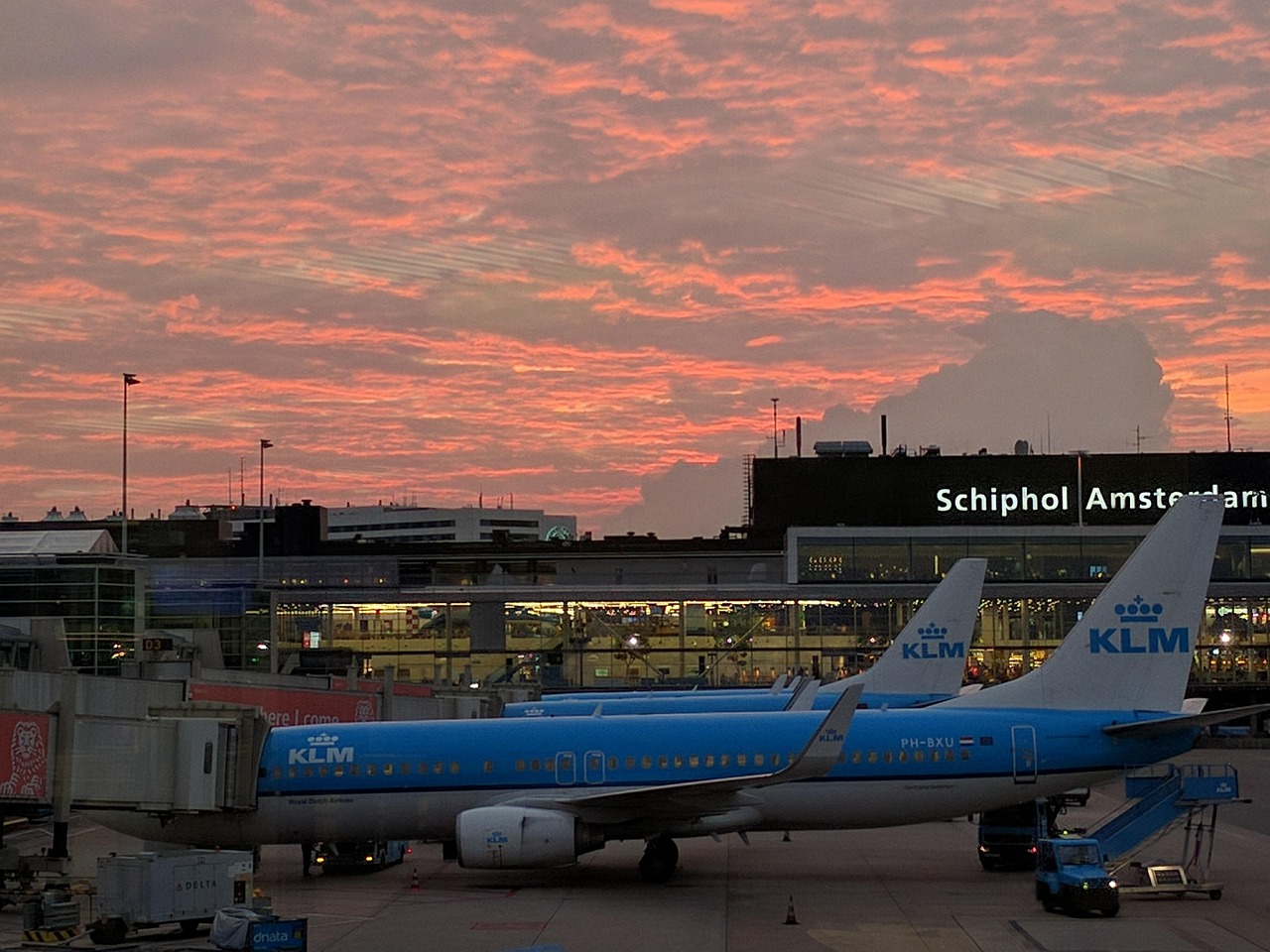
Airplane tickets from Amsterdam can be expensive because several costs and market forces come together: strong demand for flights from Schiphol, airline operating costs, airport charges, limited capacity on some routes, and Dutch air passenger tax.
But there is an important point that is easy to miss: Schiphol itself is not the only reason your ticket costs more. The final fare is determined by the airline’s pricing system, which responds to demand, competition, fuel and operating costs, airport charges, taxes, and the availability of seats.
In 2026, passengers departing from a Dutch airport are subject to a Dutch air passenger tax of €30.25 per passenger. From 2027, the tax is scheduled to become distance-based, with long-distance flights paying substantially more than short-distance flights.
So why can a flight from Amsterdam still seem surprisingly expensive even when you book well in advance? Let’s look at the main reasons.
Last updated: August 16, 2026.
The short answer: why are flights from Amsterdam expensive?
There is no single “Amsterdam flight tax” that explains the price. Several factors can affect the fare you see on a booking website.
- Demand: popular routes and busy travel periods allow airlines to charge more.
- Airline operating costs: aircraft, fuel, crew, maintenance and other operating expenses all have to be covered.
- Schiphol charges: airlines pay airport and security charges for using the airport.
- Dutch air passenger tax: passengers departing from Dutch airports are subject to this government tax, subject to exemptions.
- Competition: fewer airlines or fewer available seats on a particular route can mean higher fares.
- Timing: airline prices change continuously as available seats are sold and demand changes.
- Route structure: a direct flight may be more expensive than an itinerary involving another airport, while on other routes the opposite can be true.
This is why comparing two flights simply by their departure airport can be misleading. A €150 flight and a €350 flight may have very different demand, competition, schedules, baggage conditions and operating costs.
Schiphol is a major international airport
Amsterdam Airport Schiphol is one of Europe’s major aviation hubs. That gives travelers an enormous choice of destinations, but operating a large international airport also involves substantial infrastructure and security costs.
Airlines using Schiphol pay airport charges for services and infrastructure. These charges are regulated under the Dutch aviation framework, and Schiphol’s charging system includes passenger, security and aircraft-related charges. Schiphol also differentiates some charges according to factors such as aircraft characteristics and environmental performance.
These costs matter because airlines ultimately have to cover the cost of operating their flights. However, it would be misleading to say that Schiphol simply adds one large fixed fee to every passenger’s ticket. Airlines incorporate their costs into their overall pricing.
For example, Schiphol’s published charging schedule lists a €21.69 security service charge per departing local passenger from April 1, 2026. This is an airport charge to the airline rather than a separate €21.69 government tax that is simply added to your booking.
If you want to understand how Schiphol works, where you need to go and what to expect before your flight, see our Beginners Guide to Schiphol Airport in the Netherlands.
Amsterdam has strong demand for flights
One of the simplest explanations for an expensive flight is also one of the most important: people want to fly from Amsterdam.
Schiphol serves Amsterdam and a large part of the Netherlands, while also attracting international travelers who use Amsterdam as a starting point or transfer point.
When many people want the same flight, airlines do not necessarily keep selling seats at the original price. Their revenue-management systems continually adjust fares according to demand and remaining seat availability.
That means the person sitting next to you on an aircraft may have paid a very different price.
For example, imagine an airline has 180 seats available. It may initially sell some seats at a low promotional fare. As those seats disappear and the departure date approaches, the remaining seats may move into more expensive fare categories.
This is why “I checked the same flight last week and it was cheaper” is perfectly possible.
When you fly matters enormously
The same Amsterdam route can have very different prices depending on the date and time.
Flights around school holidays, Christmas, New Year, Easter and popular summer travel periods can become expensive because more people are competing for the same seats.
The same applies to particular departure times. A convenient morning flight may be more attractive to business travelers than a very early or late departure, allowing the airline to price it differently.
If your travel dates are flexible, checking several nearby dates can therefore be more valuable than searching for a different airline.
Airline competition affects the price
Another reason Amsterdam flights can be expensive is the level of competition on a particular route.
If several airlines operate a route with many daily flights, they have a strong incentive to compete for passengers. If only one or two airlines offer a convenient nonstop service, there may be less direct price competition.
This is particularly important when comparing a nonstop flight with a connecting itinerary. A direct flight saves time and reduces the risk of missing a connection, but passengers may pay more for that convenience.
The cheapest ticket is therefore not always the cheapest overall option once you consider baggage, airport transfers, travel time and the inconvenience of a connection.
Dutch air passenger tax makes flying from the Netherlands more expensive
Taxes are another part of the explanation, although they are not the only reason Amsterdam flights cost what they do.
The Netherlands charges air passenger tax on passengers departing from Dutch airports. The tax applies to passengers aged 2 and over, while transfer passengers are excluded.
In 2026, the rate is:
€30.25 per departing passenger per flight.
The tax applies to departures from Dutch airports including Amsterdam Airport Schiphol, Eindhoven Airport, Rotterdam The Hague Airport and several other Dutch airports.
It is worth making an important distinction here. The Dutch Tax Administration describes the airport operator as responsible for paying the air passenger tax. Airlines can incorporate the resulting cost into their ticket prices and fare structures, but it should not be understood as a simple €30.25 surcharge that Schiphol adds to every booking.
How much was Dutch air passenger tax before 2026?
The current rate has increased over the past few years.
- 2022: €7.95
- 2023: €26.43
- 2024: €29.05
- 2025: €29.40
- 2026: €30.25
These figures show that the 2026 increase itself is relatively small: €0.85 compared with 2025.
So if you are wondering why your Amsterdam flight costs €100 or €200 more than expected, the 2026 tax increase alone is not the explanation. Airline pricing, demand, route competition and operating costs can have a much larger effect on the fare.
What changes to Dutch flight tax in 2027?
From January 1, 2027, the Dutch air passenger tax is scheduled to become differentiated according to the distance category of the passenger’s final destination.
Instead of one flat rate for departing passengers, there will be three rates:
| 2027 destination category | Air passenger tax |
|---|---|
| Short distance: less than 2,000 km | €29.40 |
| Medium distance: 2,000–5,500 km | €47.24 |
| Long distance: more than 5,500 km | €70.86 |
The purpose of the change is to place a higher tax burden on longer flights, which generally have higher environmental costs.
There is an important detail, however: these figures are the rates specified for the new system and are expressed in 2025 price levels in the government’s supporting documents. The practical classification of destinations is established through the legal destination categories rather than simply asking a passenger to calculate the exact number of kilometers on a map.
Will every flight from Amsterdam become more expensive in 2027?
No.
This is one of the most important differences between the current and future systems.
A short-distance flight will have a 2027 tax rate of €29.40, which is actually lower than the €30.25 flat rate applying in 2026.
A medium-distance flight will have a €47.24 rate, while a long-distance flight will have a €70.86 rate.
So the effect depends strongly on where you are flying.
| Flight type | 2026 tax | 2027 tax | Effect |
|---|---|---|---|
| Short distance | €30.25 | €29.40 | Lower |
| Medium distance | €30.25 | €47.24 | Higher |
| Long distance | €30.25 | €70.86 | Much higher |
This is why saying “Amsterdam flights will become more expensive in 2027” is too broad. Longer flights are the main target of the change.
What about connecting flights?
Connecting flights require another important distinction.
Dutch air passenger tax excludes transfer passengers. In other words, someone who is transferring at a Dutch airport is treated differently from a passenger beginning their journey there.
The 2027 differentiated tax is also based on the passenger’s final destination category. Therefore, you should not assume that every individual flight segment is separately taxed at the long-distance rate.
This matters when comparing a direct Amsterdam flight with a connecting itinerary.
However, tax should not be the only thing you compare. An itinerary with a connection may look cheaper initially but cost more once you include checked baggage, airport transfers, additional travel time and the risk of disruption.
What about flights to the Dutch Caribbean?
The new distance-based system contains a special provision for destinations in the Caribbean part of the Kingdom of the Netherlands.
Although some of these destinations are geographically more than 5,500 kilometers from the Netherlands, flights to the relevant Dutch Caribbean destinations fall under the lowest tax category rather than automatically receiving the long-distance rate.
This is an important exception to remember if you are comparing the future tax treatment of long-distance flights.
So, is Schiphol actually more expensive than other airports?
Not necessarily.
It is tempting to conclude that Amsterdam flights are expensive simply because Schiphol is an expensive airport. But that ignores the way airline pricing works.
A flight from Eindhoven or Rotterdam might have a lower advertised fare, but that does not automatically make it cheaper for you.
You should compare the total journey cost, including:
- the airline ticket;
- checked and cabin baggage;
- seat-selection fees;
- transport to the airport;
- parking or airport transfer costs;
- the value of your travel time;
- and the cost of a possible connection.
A €30 cheaper flight from another airport is not necessarily a bargain if reaching that airport costs €35 and takes another hour.
How can you find cheaper flights if Amsterdam is expensive?
If a flight from Amsterdam is unusually expensive, don’t assume that you have to pay the price. For European trips, the Netherlands has several alternative airports. But for intercontinental travel, a different strategy can be much more interesting: compare Amsterdam with major airports in Belgium and Germany.
That can make sense because you can reach several international airports from the Netherlands by train or other public transportation. The important calculation is not simply:
“Which airport has the cheapest flight?”
Instead, compare:
flight price + transport to the airport + baggage + parking/transfer costs + travel time.
Consider Brussels Airport for long-haul flights
Brussels Airport (Zaventem) is one of the most useful alternatives to Amsterdam Schiphol for travelers in the Netherlands who are looking for an intercontinental flight.
It is particularly worth checking if the airfare from Amsterdam is high and your destination is served well from Brussels.
The advantage is that Brussels Airport is connected directly to the Belgian railway network, and international train connections make the airport accessible from the Netherlands. Current international rail information lists Brussels Airport among the airports that can be reached by train from the Netherlands.
There is also a direct train connection between Amsterdam and Brussels Airport. Current journey information shows a direct journey of around two hours, although travel times and timetables can change.
This makes Brussels particularly interesting when you live in the Randstad or elsewhere in the southern part of the Netherlands.
When does Brussels make financial sense?
Suppose a long-haul flight from Amsterdam costs €850, while the same destination from Brussels costs €620.
If your return train journey to Brussels Airport costs €60, the Brussels option could still save you around €170 before considering any other differences.
But don’t automatically choose Brussels just because the airfare is lower. Check the complete journey and make sure the departure time works with the train schedule.
For an early-morning intercontinental flight, you may need to travel to Belgium the evening before. That can turn a seemingly cheap flight into a more expensive trip once you add a hotel.
Düsseldorf Airport can be an excellent alternative
For travelers in the eastern and southern Netherlands, Düsseldorf Airport can be particularly interesting.
Düsseldorf has an extensive international network and offers intercontinental services. More importantly for Dutch travelers, the airport is well connected to the German railway network and has strong connections towards the Netherlands.
Düsseldorf Airport’s own 2026 information lists Amsterdam at approximately 2 hours 15 minutes by train, with Utrecht at about 1 hour 48 minutes and Eindhoven at about 2 hours 27 minutes.
The airport itself has a long-distance railway station, Düsseldorf Flughafen Fernbahnhof. From there, the SkyTrain connects passengers to the terminal in about seven minutes. There is also an S-Bahn station directly beneath the terminal.
This combination makes Düsseldorf worth checking whenever a flight from Amsterdam is significantly more expensive.
Düsseldorf can be especially interesting for travelers in the east of the Netherlands
If you live near cities such as Arnhem, Nijmegen, Venlo, Eindhoven or Maastricht, the geographical difference between Amsterdam and Düsseldorf may be smaller than you initially expect.
Even travelers farther north should not automatically dismiss Düsseldorf. The question is whether the saving on the flight compensates for the additional journey.
Düsseldorf Airport also lists international bus connections from several Dutch cities, giving travelers another option when comparing transport costs.
Frankfurt Airport is worth checking for long-haul travel
For intercontinental flights, Frankfurt Airport is another airport Dutch travelers should consider.
Frankfurt is one of Europe’s major international aviation hubs, with a particularly extensive long-haul network. That makes it useful when you are searching for destinations where Amsterdam has limited competition or where flights from Schiphol are unusually expensive.
The disadvantage is the additional distance. Frankfurt is considerably farther from the Netherlands than Brussels or Düsseldorf.
However, the airport has its own long-distance railway station, and direct ICE trains connect Frankfurt Airport with Amsterdam. Current Deutsche Bahn information shows direct services between Frankfurt Airport’s long-distance station and Amsterdam, with journey times of roughly 3 hours 40 minutes.
That means Frankfurt can be a realistic alternative for a sufficiently large airfare saving.
When is Frankfurt worth considering?
For a €30 saving, probably not.
For a €250 or €400 saving on a long-haul return ticket, the calculation can look very different.
Frankfurt becomes more interesting when:
- the Amsterdam fare is unusually high;
- Frankfurt has much better availability to your destination;
- you are booking several tickets and the saving multiplies;
- you can travel comfortably to Frankfurt by train;
- or the Frankfurt flight has a substantially better schedule.
As always, compare the complete journey rather than the airfare alone.
Don’t ignore Cologne/Bonn Airport
Cologne Bonn Airport can also be worth checking, although it is not as obvious a long-haul alternative as Düsseldorf or Frankfurt.
Its location makes it particularly relevant for travelers in the eastern Netherlands and Limburg, especially when a good fare or suitable connection appears.
It can also be combined with Germany’s extensive railway network, making the airport accessible without having to drive across the border.
For a traveler from the Netherlands, however, Cologne/Bonn should be treated as a route-by-route comparison rather than a universal replacement for Amsterdam.
Compare airports based on your destination
The best alternative airport depends heavily on where you are going.
For example, one airport might have excellent nonstop service to North America, while another may have a better choice of flights to Asia or the Middle East.
That’s why it makes little sense to ask:
“Is Brussels cheaper than Amsterdam?”
A better question is:
“For my destination and travel dates, which airport gives me the best total journey price?”
Search Amsterdam, Brussels, Düsseldorf and Frankfurt for the same dates and destination. Then add the transport cost to each airport.
Public transportation can make an airport outside the Netherlands practical
You don’t necessarily need a car to use an airport abroad.
Brussels Airport has a railway station directly connected to the terminal, and international rail services connect it with cities in the Netherlands.
Düsseldorf Airport is also connected to long-distance rail services, with the airport’s railway station linked to the terminal by the SkyTrain.
Frankfurt Airport has a long-distance railway station with direct ICE services to Amsterdam.
This creates an interesting alternative for Dutch travelers: take the train to another country’s major international airport and use that airport for your long-haul flight.
For some journeys, the extra train ride can be worthwhile if the flight saving is substantial.
Don’t forget the cost of getting home
There is one mistake travelers frequently make when comparing foreign airports: they calculate the outward journey but forget the return.
Imagine you save €220 by flying from Frankfurt instead of Amsterdam.
That sounds excellent—until you discover that your return flight arrives late in the evening and the last convenient train to your home is no longer available.
You might then need a hotel, taxi or expensive alternative transport.
Always check the complete journey in both directions before booking.
What about other airports in the Netherlands?
The Netherlands does have other airports, including Eindhoven Airport and Rotterdam The Hague Airport.
These can be useful alternatives for European flights and selected holiday destinations.
They are not, however, direct substitutes for Schiphol when your goal is to find a broad choice of intercontinental flights.
For long-haul travel, it can therefore be more productive to compare Schiphol with Brussels, Düsseldorf and Frankfurt rather than simply searching every Dutch airport.
So, should you avoid Amsterdam Airport?
No.
Amsterdam can still be the best choice, even when another airport has a cheaper headline fare.
Schiphol may save you several hours of ground travel, provide a nonstop flight when the alternative requires a connection, or have a better departure time.
The goal is not to find the airport with the lowest advertised airfare.
The goal is to find the cheapest and most convenient complete journey.
A simple airport comparison strategy
When your Amsterdam flight looks expensive, use this five-step process:
- Search Amsterdam for your exact destination and dates.
- Search Brussels Airport for the same itinerary.
- Search Düsseldorf and Frankfurt, particularly for intercontinental destinations.
- Add the complete public-transport cost to each airport.
- Compare the total price, travel time and convenience before booking.
This approach can reveal that a €100 cheaper flight is not actually cheaper—or that a €250 cheaper flight is an excellent reason to travel to another airport.
What is the best next step after comparing airports?
Once you have found a good flight from Amsterdam, Brussels or Germany, the next question is how to make the airport part of your journey as easy as possible.
If you are flying from Amsterdam, continue with our Beginners Guide to Schiphol Airport in the Netherlands for practical information about getting around the airport, security, transfers and departure procedures.
If you are comparing airlines rather than airports, you can also read What Airlines Are Dutch? Discover the Dutch Carriers to learn more about the airlines associated with the Netherlands.
Frequently Asked Questions
Can I fly from Brussels instead of Amsterdam?
Yes. Brussels Airport is a realistic alternative for travelers in the Netherlands, particularly for international and intercontinental flights. It has direct rail connections with the Netherlands, making it possible to reach the airport without driving.
Is Düsseldorf Airport a good alternative to Amsterdam?
It can be, especially for travelers in the eastern and southern Netherlands. Düsseldorf has intercontinental services and strong rail connections with the Netherlands. The airport’s 2026 information puts Amsterdam at approximately 2 hours 15 minutes away by train.
Can I travel from the Netherlands to Frankfurt Airport by train?
Yes. Direct ICE services operate between Frankfurt Airport’s long-distance railway station and Amsterdam, with journey times of roughly 3 hours 40 minutes in current schedules.
Which airport is cheapest for intercontinental flights from the Netherlands?
There is no airport that is always cheapest. Compare Amsterdam, Brussels, Düsseldorf and Frankfurt for your particular destination and dates. Then add the cost of getting to and from each airport.
Are Eindhoven and Rotterdam good alternatives for long-haul flights?
They can be useful for European travel and selected holiday destinations, but their networks are much less suitable as general alternatives when you are specifically looking for a wide choice of intercontinental flights. For long-haul travel, Brussels and major German hubs such as Düsseldorf and Frankfurt are often more useful comparisons.
Is it worth taking a train to another country to catch a cheaper flight?
Sometimes. If the airfare saving is large enough to compensate for the additional train fare and travel time, it can be an excellent strategy. The key is to compare the complete door-to-door cost rather than just the airline ticket.