Living in the Netherlands and living in Canada can feel surprisingly different, even though both countries are wealthy, developed democracies with high living standards and strong public services. The biggest differences are not necessarily about quality of life. They are about space, transportation, housing, climate, healthcare, culture and the way everyday life is organized.
For someone considering a move, spending more time in either country, or simply wondering what daily life is really like, the Netherlands and Canada offer two very different experiences.
The Netherlands is compact, densely populated and highly connected. Canada offers enormous distances, more space and a much greater variety of landscapes. The Dutch lifestyle generally makes it easier to live without a car, while Canadian life is often more dependent on driving, especially outside the largest urban areas.
There is also an interesting historical connection between the two countries. Canada has a significant Dutch Canadian community, and many Canadians have Dutch family roots. For anyone interested in that connection, the article about Canadians with Dutch ancestry provides a useful introduction to the history behind it.
Last updated: August 10, 2026.
| Category | Netherlands | Canada |
|---|---|---|
| Overall lifestyle | Compact, connected and convenient | Spacious, spread out and more car oriented |
| Size and space | Small country with high population density | Enormous country with much more space |
| Transportation | Cycling and public transportation are important parts of daily life | Cars are much more important, especially outside major urban areas |
| Cycling | Excellent cycling infrastructure and cycling is part of everyday transport | Varies considerably by city and region |
| Housing | Homes are generally smaller, particularly in cities | Homes are generally larger, with more space in many areas |
| Nature | Coast, countryside, canals, dunes and managed landscapes are easily accessible | Vast forests, lakes, mountains, wilderness and national parks |
| Distances | Short distances make exploring different cities relatively easy | Long distances make road trips and domestic travel a bigger part of the experience |
| Climate | Mild maritime climate with relatively moderate temperatures | Much wider range of climates depending on the region |
| Language | Dutch is the main language, while English is widely spoken | English and French are the official languages |
| European travel | Excellent location for exploring neighbouring European countries | International travel generally involves greater distances |
| Best suited to | People who value convenience, cycling, cities and proximity | People who value space, privacy, road trips and nature |
The simplest way to understand the difference is that the Netherlands makes proximity easier, while Canada makes space easier. The Netherlands has an extensive cycling network and cycling accounts for more than a quarter of all journeys, while Canada’s enormous geography means that distances between destinations can be much greater.
Netherlands vs Canada at a glance
The short answer
There is no single winner when comparing living in the Netherlands with living in Canada. The better choice depends heavily on what matters most in everyday life.
The Netherlands can be a better fit for people who value compact cities, cycling, public transportation, short travel distances, historic towns, easy access to other European countries and a lifestyle where many daily activities can be done without a car.
Canada can be a better fit for people who value personal space, large homes, extensive natural landscapes, long road trips, outdoor recreation and the feeling of having more room around them.
For a Canadian moving to the Netherlands, the biggest adjustment is often not the language. English is widely spoken. The bigger change can be getting used to a much more compact country where housing is smaller, cycling is part of everyday transportation and several cities can be reached within a relatively short journey.
Best for compact European living
The Netherlands is unusually compact. Amsterdam, Rotterdam, Utrecht, The Hague and many smaller cities are connected by an extensive network of roads, railways and cycle routes.
This creates a different relationship with distance. A trip that might feel like a short journey in Canada can cross several Dutch municipalities. A weekend can also include several different towns without requiring a long road trip.
That compactness is one of the Netherlands’ biggest advantages for people who enjoy variety without spending hours behind the wheel.
It also makes the country particularly attractive as a base for exploring Europe. Belgium, Germany and other European destinations are much closer than they would be from most Canadian cities.
Best for space and nature
Canada has an entirely different scale. The country stretches across a huge area and contains everything from Atlantic coastlines and prairie landscapes to the Rocky Mountains, forests and Arctic environments.
That scale creates opportunities that simply cannot be replicated in the Netherlands. Large homes, spacious properties, extensive wilderness and long distance road trips are much more realistic in many parts of Canada.
The Netherlands has beautiful nature as well, but it is generally more managed and much more closely connected to towns, villages, agriculture and infrastructure.
For someone who wants wilderness and physical space, Canada has a clear advantage. For someone who wants to reach several cities, attractions and historic places without travelling enormous distances, the Netherlands has the advantage.
Quality of life in the Netherlands vs Canada
Daily life and convenience
Quality of life is often about small practical details rather than spectacular experiences. How long does it take to get to work? Can groceries be bought without driving? How easy is it to visit another city? How close are restaurants, shops, schools and parks?
This is where the Dutch model can feel very different from Canadian life.
In many Dutch towns and cities, shops, schools, supermarkets, cafés, parks and public transportation are relatively close together. Walking and cycling can therefore become normal parts of daily life rather than activities reserved for exercise or recreation.
Canada can offer more space, but convenience often depends on location. In dense urban neighbourhoods, many services may be close by. In suburban and rural areas, a car can become essential for work, shopping, appointments and social activities.
Space, cities and population density
The difference in population density is one of the easiest things to notice.
The Netherlands had about 18 million residents on 1 January 2026. What makes the Dutch situation particularly noticeable is how concentrated everyday life is within a relatively small country. Towns, cities, roads, railways, farms and industrial areas are often close to one another.
Canada is the opposite in terms of physical scale. The country has vast areas with very low population density, while most Canadians live relatively close to the southern border and in or around major metropolitan areas.
This means that the Netherlands can feel busy and densely developed, while Canada can feel much more spacious even when comparing similarly sized urban populations.
Social atmosphere
Another important difference is the social atmosphere. Dutch communication is often direct and practical. A Dutch person may say exactly what they think without intending to be rude.
Canadians are often perceived as more indirect and polite in everyday communication. That does not mean that every Dutch person communicates directly or every Canadian communicates indirectly. Personal personality, region, age and social environment all matter.
Still, the difference can be noticeable for Canadians spending an extended period in the Netherlands.
The Dutch preference for direct communication can initially feel blunt. Over time, many people discover that directness can also make conversations clearer because there is less need to interpret what someone really means.
What living in the Netherlands feels like compared with Canada
The biggest adjustment for Canadians
For many Canadians, the biggest adjustment is the lack of physical space.
A Dutch home can feel small compared with a typical Canadian house. Gardens can be smaller, streets can be narrower and neighbouring buildings can be much closer together.
At the same time, that smaller physical footprint comes with advantages. A smaller home can be closer to shops, restaurants, schools, train stations and workplaces. A bicycle can replace a car for many everyday journeys.
The result is a different trade off. Canada often provides more private space, while the Netherlands can provide easier access to shared public space and nearby amenities.
What feels easier in the Netherlands
Several things can feel remarkably convenient in the Netherlands.
- Travelling between cities without driving
- Using a bicycle for everyday journeys
- Finding a train station in many urban areas
- Visiting historic city centres
- Taking short trips to neighbouring countries
- Combining several destinations in one day
- Living close to shops and everyday services
The country’s infrastructure makes distance feel smaller. This is particularly noticeable to Canadians who are accustomed to judging travel time in hours rather than minutes.
What can feel harder
The Netherlands also has disadvantages, especially for people accustomed to Canadian levels of space.
Housing can be expensive and difficult to find in popular areas. Private outdoor space may be limited. Roads and city centres can feel crowded. Parking can be difficult and expensive. Weather can also take some getting used to, particularly for Canadians expecting colder winters with more reliable snow.
There is also less of a sense of physical separation between urban and rural areas. In Canada, leaving a city can eventually mean reaching enormous areas of forest, farmland or wilderness. In the Netherlands, another town or developed area is often much closer.
That contrast explains why the Netherlands can feel either wonderfully convenient or frustratingly crowded, depending on personal preferences.
For Canadians with a family connection to the Netherlands, the transition can have another interesting dimension. Dutch ancestry does not necessarily predict what living in the country will be like today, but it can make the cultural connection more meaningful. The history of Dutch immigration to Canada is explored in Canadians with Dutch ancestry.
Cost of living in the Netherlands vs Canada
Cost of living is one of the most important considerations when comparing the Netherlands and Canada. Neither country is uniformly cheaper. The answer depends heavily on the city, housing situation, income, transportation needs and lifestyle.
For many people, housing is the biggest difference. Everyday expenses such as groceries, restaurants, energy and transportation can also vary, but rent or mortgage costs can have a much larger effect on a household budget.
Housing
Housing can be challenging in both countries, but the nature of the problem is different.
The Netherlands has a persistent shortage of housing, particularly in popular cities and regions. Rental housing is divided into social, mid priced and private sectors, with different rules applying to each. In 2026, the Dutch government uses a regulated system for social and mid priced rental housing, while higher priced private rentals have different rules. The maximum annual rent increase for liberalised private rentals in 2026 is 4.4 percent.
In Canada, housing costs vary enormously between provinces and cities. Toronto and Vancouver can be very expensive, while many smaller cities and communities offer considerably more space for the same budget.
The physical difference can be just as important as the financial difference. A typical Dutch home often makes efficient use of limited space, while Canadian homes can offer larger rooms, larger gardens and more storage.
For someone used to Canadian housing, Dutch housing may initially feel surprisingly compact. For someone used to urban European housing, Canadian homes may feel exceptionally spacious.
Groceries and everyday spending
Grocery costs cannot be compared simply by looking at a shopping basket from one country. Prices depend on the supermarket, region, product choices and exchange rates.
The Netherlands has a large selection of supermarkets and discount chains, making it possible to shop relatively economically. Canadian shoppers also have a wide range of supermarkets, but prices can vary substantially between provinces and between urban and remote areas.
One noticeable Dutch difference is the way fresh food fits into everyday shopping. Many households make frequent smaller shopping trips rather than doing one very large weekly shop. Smaller refrigerators and smaller kitchens are common compared with many Canadian homes.
Transport and fuel
Transportation can change the cost comparison significantly.
In many Dutch cities, owning a car is optional rather than essential. Cycling, walking and public transportation can cover a large part of everyday travel.
In Canada, the situation depends much more on location. A household in central Montreal or Toronto can live with little car use, while a household in a suburban, rural or remote community may depend heavily on one or more vehicles.
That means a direct comparison of petrol prices does not tell the whole story. A person who rarely needs a car may spend less on transportation overall even if public transport itself is not inexpensive.
Taxes and everyday costs
Tax systems are different enough that comparing only income tax rates can be misleading. The Netherlands uses a combination of income tax, social contributions and consumption taxes, while Canada has federal and provincial or territorial taxes.
Healthcare is another important part of the calculation. In the Netherlands, residents and workers generally need Dutch basic health insurance and pay a premium to an insurer. In Canada, eligible residents receive publicly funded coverage through their province or territory for medically necessary insured services.
For that reason, a realistic cost of living comparison should look at total household expenses after taxes, housing, healthcare, transport and other recurring costs rather than focusing on one individual price.
Healthcare in the Netherlands vs Canada
How Dutch healthcare works
The Dutch healthcare system combines mandatory basic health insurance with healthcare providers and insurers operating within a regulated system.
People who live or work in the Netherlands are generally required to take out standard Dutch health insurance. The government determines the contents of the basic package, and insurers must accept applicants for that package regardless of age or health. Children under 18 are insured without paying the standard premium.
The basic package covers important healthcare such as general practitioner care, hospital treatment and prescription medicines. Additional insurance is available for services that are not included in the basic package.
This means healthcare in the Netherlands is not simply a system where every medical expense is automatically free at the point of use. Insurance premiums, deductibles and the details of coverage matter when calculating the actual household cost.
How Canadian healthcare works
Canada has a publicly funded healthcare system administered by the provinces and territories. Eligible residents can access publicly funded health insurance through their provincial or territorial plan.
Under the Canada Health Act, provincial and territorial plans must cover medically necessary hospital, physician and certain surgical dental services. Patients generally do not pay directly for these insured services.
However, Canadian healthcare is not identical from coast to coast. Provinces and territories determine eligibility and administer their own health insurance plans. Services such as prescription medicines outside hospitals, dental care and vision care can have different coverage arrangements depending on the province and the person.
Canada also introduced changes to the Canada Health Act framework taking effect in April 2026 concerning medically necessary services provided by certain regulated health professionals, reinforcing the principle that patients should not face charges for services that would otherwise be insured when provided by a physician.
Which system feels cheaper at the point of use?
This is one area where the two countries feel noticeably different.
In Canada, an eligible resident generally does not receive a bill for an insured medically necessary visit to a doctor or hospital. The system is primarily funded through taxation and public health insurance plans.
In the Netherlands, people generally pay for mandatory basic health insurance and may also have out of pocket costs depending on the care received and the applicable deductible or coverage rules.
That does not automatically make one system cheaper overall. Taxes, insurance premiums, employer benefits, healthcare usage and access to additional coverage all influence the final cost.
For a Canadian considering a move to the Netherlands, this difference is worth understanding before comparing salaries. A Dutch salary should not be compared directly with a Canadian salary without considering the different tax and healthcare arrangements.
Work, income and education
Minimum wage and salaries
The Netherlands has a statutory hourly minimum wage. Since 2024, the legal minimum wage has been expressed as an hourly amount rather than a fixed monthly, weekly or daily amount.
From 1 July 2026, the statutory minimum wage for employees aged 21 and over is €14.99 per hour before tax. Younger workers have lower statutory rates based on age.
Actual salaries are of course much higher in many professional occupations, and earnings vary substantially by sector, education, experience and location.
Canada also has a combination of federal and provincial or territorial employment rules, with minimum wage rates varying according to the applicable jurisdiction and type of employment.
For someone deciding between the two countries, salary alone is therefore not enough. Housing, taxes, healthcare, transportation and working hours should all be included in the calculation.
Work culture
Work culture can be one of the more subtle differences for Canadians moving to the Netherlands.
Dutch workplaces often place a strong emphasis on direct communication, planning and work life balance. Part time employment is also common, and working fewer hours does not necessarily mean someone is considered less committed to their career.
Canadian workplaces vary enormously by industry and region, but there can be a stronger expectation of flexibility around working hours in some sectors.
The most important difference is not that one country works harder than the other. It is that expectations around availability, meetings, hierarchy, directness and personal time can differ.
Education and language
Both countries have extensive public education systems, but the way education is organised differs.
In the Netherlands, children generally attend primary education before moving into different types of secondary education. The system gives students different educational pathways during their school years.
Canada’s education system is primarily administered by provinces and territories. This means curricula, school structures and policies can vary between provinces.
Language can also influence the experience of education. Dutch is the main language of education in the Netherlands, although international schools and higher education programmes in English are widely available.
Canada has two official languages at the federal level, English and French, with the balance between them varying greatly by province and community.
For an English speaking Canadian, the Netherlands can therefore be relatively easy to navigate socially and professionally in many situations, but learning Dutch becomes increasingly valuable for deeper integration into local life.
Transportation and cycling in the Netherlands vs Canada
Cycling is part of everyday life
One of the most noticeable differences between living in the Netherlands and Canada is the role of the bicycle.
In the Netherlands, cycling is not simply an activity for exercise or recreation. It is a practical way to get to work, school, shops, restaurants, train stations and appointments.
The Dutch government estimates that bicycles are used for more than a quarter of all transport journeys in the country. The Netherlands also has an extensive network of bicycle routes, making cycling a realistic option for many everyday journeys.
This is particularly noticeable in Dutch cities and towns, where dedicated cycle paths and bicycle parking are common. Children often learn to cycle from a young age, and adults can continue using bicycles as their main form of transportation for decades.
Canada has certainly become more cycling friendly in many cities, but the experience varies considerably by location. Cycling can be an excellent way to commute or exercise in cities with good infrastructure, while it may be much less practical in suburban or rural areas.
The important difference is therefore not simply that more people cycle in the Netherlands. Cycling is much more deeply integrated into the country’s transportation system.
Public transport in the Netherlands
Public transportation is another major difference between the two countries.
The Netherlands has trains, buses, trams and metros serving different parts of the country. These forms of transportation are designed to work together, allowing people to combine cycling, walking and public transport during the same journey.
Train stations are particularly important because they connect cities and towns across the country. Bicycles also play a major role in getting people to and from stations.
This makes it possible for many people to live without owning a car, particularly in larger cities and towns with good public transport connections.
Canada also has extensive public transportation in some metropolitan areas. Toronto, Montreal and Vancouver, for example, have large networks. However, public transportation becomes much less practical in many smaller communities and suburban areas.
The enormous size of Canada is an important reason for this difference. Connecting cities that are hundreds or thousands of kilometres apart presents very different challenges from connecting Dutch cities within a relatively compact country.
For a more detailed look at whether owning a car is actually necessary, see buying a car vs public transport in the Netherlands.
Cars in the Netherlands vs Canada
Cars are common in both countries, but their role in everyday life can be very different.
In Canada, driving is often the most convenient option because homes, workplaces, shopping areas and services can be spread over considerable distances. Outside dense urban neighbourhoods, a car may be essential for everyday life.
In the Netherlands, a car is often one transportation option among several. Someone may cycle to work during the week, take a train to another city and use a car for a family trip or a journey to a less accessible destination.
That does not mean Dutch households never need cars. Families, commuters, people living in rural areas and anyone travelling frequently to locations without convenient public transport may still find a car extremely useful.
The main difference is that Dutch infrastructure provides more realistic alternatives to driving for everyday journeys.
Infrastructure and travel distances
Why distances feel smaller in the Netherlands
The physical size of the Netherlands changes the way people experience distance.
Several major cities are relatively close to one another, and a journey can pass through multiple towns and developed areas without feeling like a long distance trip.
For Canadians, this can be one of the biggest adjustments. In Canada, a journey between two cities can involve several hours of driving and still be considered a normal domestic trip.
In the Netherlands, travelling between cities is often part of ordinary daily life. Someone can live in one city, work in another and visit a third without the journey becoming a major undertaking.
This is especially useful for people who enjoy exploring different places but do not want to spend large amounts of time travelling.
Travelling between Dutch cities
The Netherlands has a dense network of roads and public transportation connections. Rail is particularly important for travelling between larger cities, while buses and regional services connect many smaller communities.
The combination of trains, buses, trams, metros, bicycles and walking creates a transportation system where different modes can complement each other.
A journey does not always have to be either a car trip or a public transport trip. A typical Dutch journey might involve cycling to a station, taking a train and then walking or cycling to the final destination.
This flexibility is one reason transportation can feel considerably different from everyday life in many parts of Canada.
Getting around Canada
Canada’s geographical size creates advantages as well as challenges.
Long distance road trips are an important part of Canadian travel culture. Driving can provide access to national parks, lakes, forests, mountain regions and remote communities that may have little or no practical public transportation.
For someone who loves road trips and wilderness, this is a major advantage.
The downside is that distance can make everyday life more dependent on a car. A home may be relatively close to a shop or workplace in geographical terms but still be inconvenient to reach without driving.
The Netherlands offers almost the opposite experience. There is less physical space, but more destinations can be reached without a car.
Language and communication
Dutch is the main language
Dutch is the main language of everyday life in the Netherlands. It is used in local government, schools, much of the media, workplaces and daily conversations.
For an English speaking Canadian, however, the initial language barrier can be surprisingly small.
English is widely spoken and understood throughout the Netherlands, especially in larger cities and among younger people. This makes it possible for many newcomers to handle everyday situations before becoming comfortable with Dutch.
That convenience should not be confused with complete integration. Speaking English can make daily life easier, but Dutch becomes increasingly important for understanding local conversations, humour, news and social situations.
English and French in Canada
Canada has two official languages, English and French. English is the dominant language in most provinces and territories, while French has a particularly strong position in Quebec and in francophone communities elsewhere in the country.
The language experience in Canada therefore depends strongly on where someone lives.
An English speaking Canadian moving to the Netherlands may find that communication is initially easier than expected. There is usually little difficulty ordering food, shopping, travelling or having basic conversations in English in many parts of the country.
The challenge tends to appear when deeper participation in local life becomes important.
Learning Dutch for everyday life
Learning Dutch is not necessarily essential for every newcomer, but it becomes increasingly valuable for anyone planning to stay for a longer period.
There is a difference between being able to function in English and feeling fully comfortable within Dutch society. A person may be able to work, shop and arrange many services in English while still missing parts of conversations happening around them in Dutch.
Learning the language can also make interactions with neighbours, schools, local organisations and other residents easier.
For someone planning to build a long term life in the Netherlands, Dutch is therefore more than a practical skill. It can be an important part of becoming connected to the local community.
Climate, scenery and housing
Weather in the Netherlands vs Canada
The climate is one of the clearest differences between the Netherlands and Canada.
The Netherlands has a temperate maritime climate. Winters are generally relatively mild compared with much of Canada, while summers are usually moderate. Rain, wind and changing weather conditions can occur throughout the year.
For Canadians, the Dutch winter can therefore feel surprisingly mild. Snow is possible, but it is not a reliable part of winter across the country. A winter day with rain, strong wind and temperatures several degrees above freezing is much more typical than the deep snow and extreme cold experienced in many parts of Canada.
Canada has a much greater range of climates because of its enormous geographical size. Winters can be extremely cold in many regions, while summers can become very warm. Coastal British Columbia, the Prairies, Ontario, Quebec and Atlantic Canada can all have very different weather patterns.
The Dutch climate is also changing. Recent years have included more periods of unusual heat, and 2026 has already produced exceptional weather. The summer of 2026 was the warmest summer recorded in the Netherlands since measurements began in 1901, according to the national weather service.
This does not mean every Dutch summer will be exceptionally hot. It does show why older descriptions of the Netherlands as simply a cool and rainy country no longer tell the complete story.
Nature and scenery
Canada has an obvious advantage when it comes to scale and wilderness.
The country offers enormous forests, mountain ranges, lakes, coastlines, national parks and remote landscapes. For people who enjoy hiking, camping, fishing, skiing or long road trips through nature, Canada provides opportunities on a scale that the Netherlands cannot match.
The Netherlands has a different kind of landscape.
Much of the country is highly managed and shaped by centuries of interaction between people and water. Polders, canals, dikes, agricultural land, dunes, forests and wetlands create a landscape that is often very accessible.
Nature in the Netherlands can therefore be surprisingly close to urban areas. A cycle ride or short journey can take someone from a city into farmland, woodland, dunes or a nature reserve.
The choice comes down to scale. Canada offers vast wilderness and dramatic natural landscapes. The Netherlands offers accessible landscapes that are closely connected to towns and cities.
Dutch houses vs Canadian homes
Housing is another area where the difference can be immediately noticeable.
Dutch homes are often designed around limited space. Terraced houses are common, gardens can be relatively small and storage space may be more limited than in a typical Canadian home.
Canadian houses are often larger, particularly in suburban areas. Larger bedrooms, basements, garages, gardens and driveways are common features in many parts of the country.
The difference is not simply about comfort. It reflects the amount of available land and the way cities have developed.
In the Netherlands, living in a smaller home can mean being much closer to shops, restaurants, public transportation and workplaces. In Canada, a larger home may come with greater distances between the home and everyday destinations.
This creates an important trade off: the Netherlands often offers proximity, while Canada often offers space.
Culture, food and social life
Directness and planning
Communication style can be one of the more noticeable cultural differences for Canadians living in the Netherlands.
Dutch communication is often direct and straightforward. People may express an opinion openly rather than using indirect language to soften it.
For someone accustomed to a more indirect communication style, this can initially seem blunt. In the Dutch context, however, directness is not necessarily intended to be unfriendly. Clear communication is often valued because it reduces uncertainty.
Planning is also important in Dutch life. Appointments, schedules and arrangements are commonly made in advance. Spontaneous visits are less universally expected than in some other cultures.
This can take some adjustment, particularly for Canadians who are used to a more casual approach to making social plans.
Lunch and coffee
Food is another small but noticeable difference.
A traditional Dutch lunch can be much simpler than a typical North American lunch. Bread, cheese, cold cuts and other straightforward toppings are common. Lunch is often treated as a practical meal rather than a long social occasion.
Coffee also plays an important role in Dutch social life. Meeting for coffee can be a simple way to catch up with friends, colleagues or family without turning the occasion into a large meal.
Canadian food culture is more varied across regions and communities, reflecting the country’s multicultural population and its strong North American influences.
Neither approach is necessarily better. The Dutch preference for simple everyday meals can be convenient, while Canada’s larger and more varied food culture can be appealing to people who enjoy greater choice.
Pets and everyday life
Pets are common in both countries, but the physical environment can affect pet ownership.
A dog owner in the Netherlands may need to think more carefully about where a dog can run freely because urban areas are compact and population density is high. At the same time, the country’s extensive network of parks, beaches, forests and walking routes provides plenty of opportunities for outdoor activities.
Canada offers much more physical space in many areas, which can be particularly attractive for people with large dogs or pets that need substantial outdoor areas.
The biggest difference is therefore not whether people in either country love pets. It is how much space is available around the home and how easily that space can be accessed.
Sports and entertainment
Football in the Netherlands
Football has a particularly strong cultural position in the Netherlands.
Professional clubs are important parts of many Dutch cities, while amateur football is played throughout the country. The national team also has a strong following, especially during major international tournaments.
For someone coming from Canada, the prominence of football can feel different from the traditional North American sports landscape.
Canadian sports culture includes ice hockey, basketball, Canadian football, baseball, soccer and many other sports. Hockey has a particularly strong cultural identity in several parts of the country.
In the Netherlands, football is much more deeply embedded in everyday sporting culture, although cycling, skating, running and other activities are also important.
For readers interested in this side of Dutch culture, the guide to the most popular sports to watch in the Netherlands provides a broader look at the country’s sporting interests.
Formula 1 and cycling
Formula 1 has also become an important part of Dutch sporting culture. The popularity of Max Verstappen has brought enormous attention to the sport in the Netherlands, while the Dutch Grand Prix at Zandvoort has become a major event.
Cycling has an even deeper connection with everyday Dutch life. It is both a practical means of transportation and a competitive sport.
Professional cycling is popular, but recreational cycling is just as important. Weekend rides, cycling holidays and trips through the countryside are common ways to experience the Dutch landscape.
Canada also has a strong cycling culture in certain regions, particularly for mountain biking, road cycling and recreational riding. The difference is that cycling in the Netherlands combines sport and transportation much more closely.
Entertainment and leisure
Entertainment options are available in both countries, but geography once again changes the experience.
The Netherlands has a dense concentration of museums, theatres, concert venues, cinemas, restaurants, festivals and historic attractions. Because cities are relatively close together, several cultural destinations can be visited during a single trip.
Canada has major cultural centres in cities such as Toronto, Montreal and Vancouver, while smaller communities often have their own festivals, theatres, sporting events and cultural attractions.
The Netherlands is particularly convenient for people who enjoy frequently changing destinations. Canada is particularly appealing to people who enjoy combining entertainment with large scale outdoor activities and road trips.
Ultimately, the cultural difference between the two countries is less about one having more entertainment than the other. It is about how close together those experiences are and how people reach them.
Living in the Netherlands as a Canadian
What may feel familiar
For Canadians, the Netherlands can feel familiar in some unexpected ways. Both countries have modern cities, multicultural communities, good infrastructure and a high standard of living.
English is also widely spoken in the Netherlands, particularly in larger cities and tourist areas. For Canadian visitors, this can make exploring the country much easier, even without speaking Dutch.
The biggest difference is often the scale of everyday life. Dutch cities are compact, shops and restaurants are often close by, and cycling and public transportation can replace many car journeys.
What may feel different
The amount of space is one of the most noticeable differences. Canada is a huge country where large homes, wide roads, long distances and extensive natural areas are common. The Netherlands is densely populated and much more compact.
This changes the way people experience distance. A destination that might require a long drive in Canada can sometimes be reached by train or bicycle in the Netherlands.
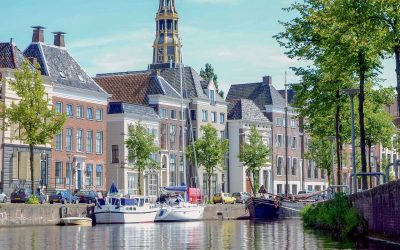
The Netherlands also has a very different urban landscape. Historic city centres, canals, narrow streets and cycling paths are often closely integrated with modern shops, offices and residential neighbourhoods.
Why the Netherlands can feel small but convenient
The compact size of the Netherlands is not necessarily a disadvantage. For travellers, it means that several very different experiences can be combined within a relatively short trip.
A day can begin in a historic city centre, continue with a visit to another town and finish at the coast. Cities such as Utrecht, Rotterdam, The Hague and Maastricht are all relatively accessible from other parts of the country, while beaches and countryside can also be surprisingly close to urban areas.
For a Canadian accustomed to much longer distances between major destinations, this is one of the most enjoyable differences to discover.
The Netherlands or Canada: which is better?
Choose the Netherlands if you prefer compact city life
The Netherlands is a strong choice for people who enjoy being close to cafés, restaurants, museums, shops and public transportation.
It is particularly appealing to travellers who like exploring cities on foot or by bicycle rather than spending most of their time in a car.
The country also offers a useful combination of urban life and nature. A city break does not necessarily mean giving up access to beaches, parks, countryside or smaller towns.
Choose Canada if you prefer space and wilderness
Canada has a clear advantage when it comes to space and large scale landscapes. Mountains, forests, lakes, national parks and remote areas provide opportunities that are difficult to match in the Netherlands.
For travellers who enjoy road trips, camping, hiking in vast natural areas or simply having plenty of personal space, Canada offers a completely different experience.
The distance between destinations can even be part of the adventure. A long drive through changing landscapes is very different from taking a short train journey between Dutch cities.
Choose the Netherlands for easy European travel
The Netherlands is especially attractive for anyone who wants to combine a visit with exploring more of Europe.
Instead of treating every new destination as a major journey, travellers can use the Netherlands as a base for discovering different cities, regions and neighbouring countries.
This is one of the biggest advantages for Canadians. Europe can feel remarkably close compared with the distances between many Canadian destinations.
Choose Canada for a bigger sense of adventure
Canada offers a different kind of variety. Its enormous size means that travelling from one region to another can produce dramatic changes in scenery, climate and culture.
The Netherlands offers variety through proximity. Canada offers variety through scale.
That difference is at the heart of the comparison.
What to consider before choosing
Think about the lifestyle, not just the country
The most useful question is not whether the Netherlands is better than Canada. It is which type of everyday environment suits you better.
If convenience, cycling, public transportation, historic cities and easy European travel are important, the Netherlands may be the more appealing choice.
If space, privacy, road trips, large homes and wilderness are more important, Canada may be the better fit.
Think about which Dutch city suits you
Choosing the Netherlands does not automatically mean choosing Amsterdam.
Amsterdam is the country’s most famous destination, but cities such as Utrecht, Haarlem, Rotterdam, The Hague, Leiden and Maastricht all offer different experiences.
For example, travellers deciding between different Dutch city experiences can explore Utrecht vs Haarlem before deciding which type of destination appeals most.
For those considering Amsterdam as a base, the comparison of staying in Haarlem or Amsterdam can also help show how different two nearby destinations can feel.
Do not stop at Amsterdam
Amsterdam is an excellent introduction to the Netherlands, but it represents only one part of the country.
The Netherlands has historic cities, coastal destinations, islands, countryside and smaller towns. The country’s compact geography makes it practical to combine several of these experiences during one trip.
For travellers staying in Amsterdam, exploring the best day trips from Amsterdam is an easy way to experience more of the country without changing hotels.
The final verdict
So, is living in the Netherlands better than living in Canada?
There is no universal winner.
The Netherlands has the advantage when it comes to compact cities, cycling, public transportation, short travel distances and access to the rest of Europe.
Canada has the advantage when it comes to space, privacy, wilderness, large homes and enormous natural landscapes.
For a Canadian who loves European cities, history, cycling and being able to experience many different places without travelling huge distances, the Netherlands can be an excellent fit.
For someone who values space, road trips, mountains, forests and a larger living environment, Canada may remain the better choice.
The simplest way to put it is this: the Netherlands makes proximity easier, while Canada makes space easier.
Neither country offers a universally better lifestyle. They simply make different ways of living easier.